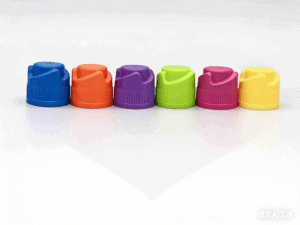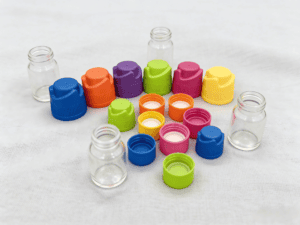
Innovative Activate Cap Manufacturers
Trusted push-cap solutions designed for functional beverages. Deliver freshness, convenience, and brand value with advanced activation caps.
Contact Us
TAGS
Plastic Bottle Caps Manufacturer: A Complete Guide to Choosing, Customizing & Sourcing Bottle Closures
Choosing the right plastic bottle cap is more than selecting a closure that fits a bottle. The cap affects product protection, leakage prevention, dispensing performance, consumer convenience, production efficiency, and the overall reliability of a packaging system.

For beverage, food, pharmaceutical, personal care, household, and industrial products, the right closure must match the bottle neck, product formulation, dispensing requirements, sealing conditions, manufacturing process, and target market.
This guide explains how plastic bottle caps are designed and manufactured, the major types of plastic closures, material selection, neck compatibility, customization options, quality control, and how to choose a reliable plastic bottle cap manufacturer for your project.
What Are Plastic Bottle Caps?
Plastic bottle caps are closures manufactured primarily from polymers such as polypropylene (PP) and polyethylene (PE) and designed to seal bottles, containers, and other packaging systems.
Depending on the application, a plastic cap may provide one or more functions:
- Sealing the container
- Preventing leakage
- Protecting the product from contamination
- Controlling product dispensing
- Providing tamper evidence
- Supporting one-handed operation
- Separating ingredients until activation
- Measuring or dosing a product
- Improving consumer convenience
A plastic bottle cap is therefore not simply a component placed on top of a bottle. It is part of the complete packaging system.
The bottle neck, cap dimensions, thread design, sealing mechanism, liner or valve, application torque, removal force, and product characteristics must work together.
For this reason, buyers looking for a plastic bottle cap manufacturer should evaluate the complete closure system rather than selecting a cap based only on appearance or price.
Types of Plastic Bottle Caps
Different products require different closure technologies. The most suitable design depends on the viscosity of the product, dispensing method, bottle neck, sealing requirements, and consumer use.
1. Standard Screw Caps
Standard screw caps use internal threads that engage with the corresponding threads on the bottle neck.
They are widely used for:
- Bottled water
- Beverages
- Food products
- Pharmaceuticals
- Cosmetics
- Household liquids
- Industrial products
Their simple construction makes them suitable for high-volume production and a wide range of packaging applications.
Depending on the product, screw caps may also incorporate liners, sealing rings, tamper-evident features, or other functional components.
2. Flip Top Caps
Flip top caps use an integrated hinge that allows the consumer to open and close the closure without completely removing it from the bottle.
They are commonly used for:
- Sauces
- Condiments
- Shampoo
- Body wash
- Personal care products
- Hand sanitizers
- Food products
- Specialty beverages
The main advantage is convenience. A well-designed flip top cap can provide one-handed operation while maintaining reliable resealing.
For products requiring controlled dispensing, a flip top cap can also be combined with a silicone valve.
QuantixCap manufactures plastic flip top caps and silicone valve closure solutions for food, beverage, pharmaceutical, personal care, and other applications.
3. Silicone Valve Caps
Silicone valve caps use a flexible silicone valve to control product flow.
The valve can remain closed when pressure is not applied and open when the bottle is squeezed or pressure is introduced.
This makes silicone valve closures particularly useful for products such as:
- Sauces
- Syrups
- Honey
- Dressings
- Body wash
- Cosmetic formulations
- Other viscous liquids
A properly engineered silicone valve can help reduce leakage, control dispensing, and improve the user experience.
4. Push-Pull Caps
Push-pull caps are commonly associated with sports and beverage packaging.
The consumer can pull the closure open for drinking and push it closed after use.
Typical applications include:
- Sports drinks
- Energy drinks
- Fitness beverages
- Nutritional products
- Bottled water
For these applications, the closure must balance easy opening with reliable sealing during transportation and use.
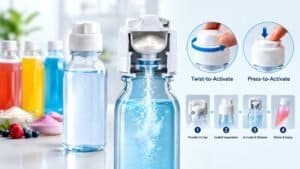
Twist-to-activate caps are designed for products where ingredients need to remain separated until the moment of consumption.
The closure can store a powder, concentrate, or other ingredient separately from the liquid inside the bottle. Twisting the activation mechanism releases the stored ingredient into the bottle.
This technology is particularly relevant to:
- Functional beverages
- Sports nutrition
- Vitamin drinks
- Supplements
- Probiotic products
- Specialty beverages
Activation packaging can help brands create products where sensitive ingredients are kept separate until consumption.
6. Press-to-Activate Caps
Press-to-activate caps use a pressing mechanism to release an ingredient stored inside the closure.
This type of packaging can be useful when the product requires on-demand mixing or activation.
The design is particularly relevant to modern beverage and nutrition products where manufacturers want to separate ingredients during storage and activate them shortly before consumption.
How to Choose the Right Plastic Bottle Cap
Choosing a plastic bottle cap should begin with the packaging system rather than the cap itself.
Before selecting a closure, evaluate the following factors.
1. Bottle Neck Size and Finish
One of the most important considerations is the bottle neck.
The cap must be mechanically compatible with the bottle neck finish.
Important specifications may include:
- Neck diameter
- Thread profile
- Neck finish
- Cap inner diameter
- Cap outer diameter
- Sealing surface
- Thread engagement
- Application torque
A cap that looks correct may still fail if the neck finish is incompatible.
For custom projects, manufacturers should normally review a bottle drawing, neck specification, physical sample, or detailed dimensional information before confirming compatibility.
2. Product Viscosity
The product inside the bottle strongly influences cap selection.
Water-like liquids may require a very different dispensing system from thick sauces, syrups, creams, or gels.
For example:
| Product Type | Typical Closure Consideration |
|---|
| Water | Standard screw or beverage closure |
| Juice | Screw, flip top, or dispensing cap |
| Sports drink | Push-pull or beverage closure |
| Sauce | Flip top or silicone valve |
| Syrup | Controlled dispensing closure |
| Shampoo | Flip top or dispensing cap |
| Lotion | Dispensing closure |
| Powder beverage | Activation or dispensing cap |
The goal is to match the closure's dispensing characteristics with the product's flow behavior.
3. Sealing Requirements
Leakage is one of the most common concerns in packaging.
A reliable closure may require:
- Proper thread engagement
- Sealing rings
- Liners
- Silicone valves
- Correct application torque
- Controlled dimensional tolerances
- Appropriate bottle-cap compatibility
The sealing system should also be evaluated under realistic transportation and storage conditions.
A closure that performs well in a laboratory environment may require additional validation when exposed to vibration, temperature changes, pressure variations, or repeated opening and closing.
4. Dispensing Requirements
Ask how the consumer should use the product.
Does the product need:
- Fast pouring?
- Controlled flow?
- One-handed dispensing?
- Squeeze dispensing?
- Anti-drip performance?
- Measured dosing?
- Ingredient activation?
These requirements determine whether a standard screw cap, flip top cap, silicone valve, push-pull closure, or activation cap is more appropriate.
What Materials Are Used for Plastic Bottle Caps?
Material selection affects durability, flexibility, chemical resistance, appearance, molding performance, and application suitability.
Polypropylene (PP)
PP is widely used for plastic closures because it provides a useful combination of strength, chemical resistance, lightweight construction, and molding performance.
PP is commonly used for:
- Flip top caps
- Screw caps
- Dispensing caps
- Beverage closures
- Specialty closures
It is particularly useful for designs that incorporate hinges or repeated opening and closing.
Polyethylene (PE)
PE offers flexibility and impact resistance and can be suitable for various dispensing and squeeze applications.
Depending on the closure design, PE and related polyethylene materials may be selected where flexibility or chemical resistance is important.PE offers flexibility and impact resistance and can be suitable for various dispensing and squeeze applications.
Silicone
Silicone is commonly used as a functional component rather than the primary cap body.
Silicone valves can provide:
- Controlled dispensing
- Self-sealing performance
- Leak resistance
- Flexible opening behavior
The correct silicone formulation and hardness should be selected according to the application and required performance.
How Are Plastic Bottle Caps Manufactured?
A professional plastic bottle caps manufacturer should be able to control the process from design through production.
A typical manufacturing workflow includes:
Product Design → Mold Development → Material Selection → Injection Molding → Component Assembly → Quality Inspection → Functional Testing → Packaging → Shipment
1. Product Design
The manufacturer evaluates:
- Bottle compatibility
- Closure dimensions
- Thread design
- Sealing structure
- Hinge design
- Orifice size
- Valve requirements
- Opening force
- Application requirements
The design should consider both manufacturing feasibility and end-user performance.
2. Mold Development
For custom plastic bottle caps, mold design is a critical step.
The mold determines important production characteristics including:
- Dimensional accuracy
- Cycle time
- Surface finish
- Part consistency
- Production efficiency
- Long-term tooling stability
For high-volume projects, the tooling strategy should be evaluated together with expected annual volume and production requirements.
3. Injection Molding
Plastic cap bodies are commonly produced using injection molding.
During this process, plastic material is heated, injected into a mold cavity, cooled, and ejected.
Consistent control of molding parameters is important for maintaining:
- Dimensions
- Thread accuracy
- Wall thickness
- Hinge performance
- Surface quality
- Structural strength
4. Assembly
Some closures contain multiple components.
For example, a silicone valve cap may include:Some closures contain multiple components.
Automated or controlled assembly helps maintain consistent positioning and functional performance.
Custom Plastic Bottle Caps: What Can Be Customized?
Not every packaging project can use a standard closure.
Custom plastic bottle caps may be developed when the buyer requires a specific bottle neck, dispensing function, appearance, or performance characteristic.
Common customization options include:
Size
Cap dimensions can be engineered to match the bottle neck and packaging system.
Color
Custom colors can support brand identity and product differentiation.
Shape
The external geometry can be modified to improve ergonomics, appearance, or functional performance.
Orifice
The dispensing opening can be designed according to the product's flow requirements.
Silicone Valve
A silicone valve can be integrated where controlled dispensing and leak resistance are required.
Hinge
For flip top caps, hinge geometry directly influences opening behavior and durability.
Tamper-Evident Features
Tamper-evident systems can help indicate whether a package has been opened.
Branding
Depending on the product design and production process, branding elements such as colors, surface treatments, or logos may be incorporated.
When Do You Need a Custom Plastic Bottle Cap Mold?
A custom mold may be appropriate when:
- No existing closure matches your bottle neck
- The product requires a unique dispensing mechanism
- The cap needs a proprietary appearance
- You need a special silicone valve
- You require a new activation system
- Existing standard caps cannot meet performance requirements
- Your annual volume justifies dedicated tooling
However, custom tooling is not automatically better.
For some projects, an existing standard cap can provide a faster and more economical solution.
A good manufacturer should first determine whether an existing design can meet the customer's requirements before recommending a new mold.
Plastic Bottle Cap Manufacturer vs. Trading Company
When sourcing plastic bottle caps, buyers often have two options: purchase directly from a manufacturer or work through a trading company.
For simple standard products, either model may work.
For custom or high-volume projects, direct manufacturer cooperation can provide advantages in:
- Technical communication
- Product development
- Mold engineering
- Quality control
- Production scheduling
- Troubleshooting
- Cost management
- Customization
The key question is not simply whether a supplier has a factory.
The buyer should determine whether the supplier has the engineering, manufacturing, quality-control, and communication capabilities required for the specific project.
Conclusion
Activation caps are no longer just a packaging novelty—they are a market-driven innovation reshaping how functional beverages are delivered. For beverage companies, collaborating with the right Activate Cap manufacturer means access to reliable technology, flexible customization, and a stronger competitive advantage.
Plastic Bottle Caps Manufacturer: A Complete Guide to Choosing, Customizing & Sourcing Bottle Closures
- Quantixcap
Choosing the right plastic bottle cap is more than selecting a closure that fits a bottle. The cap affects product protection, leakage prevention, dispensing performance, consumer convenience, production efficiency, and the overall reliability of a packaging system.
For beverage, food, pharmaceutical, personal care, household, and industrial products, the right closure must match the bottle neck, product formulation, dispensing requirements, sealing conditions, manufacturing process, and target market.
This guide explains how plastic bottle caps are designed and manufactured, the major types of plastic closures, material selection, neck compatibility, customization options, quality control, and how to choose a reliable plastic bottle cap manufacturer for your project.
What Are Plastic Bottle Caps?
Plastic bottle caps are closures manufactured primarily from polymers such as polypropylene (PP) and polyethylene (PE) and designed to seal bottles, containers, and other packaging systems.
Depending on the application, a plastic cap may provide one or more functions:
- Sealing the container
- Preventing leakage
- Protecting the product from contamination
- Controlling product dispensing
- Providing tamper evidence
- Supporting one-handed operation
- Separating ingredients until activation
- Measuring or dosing a product
- Improving consumer convenience
A plastic bottle cap is therefore not simply a component placed on top of a bottle. It is part of the complete packaging system.
The bottle neck, cap dimensions, thread design, sealing mechanism, liner or valve, application torque, removal force, and product characteristics must work together.
For this reason, buyers looking for a plastic bottle cap manufacturer should evaluate the complete closure system rather than selecting a cap based only on appearance or price.
Types of Plastic Bottle Caps
Different products require different closure technologies. The most suitable design depends on the viscosity of the product, dispensing method, bottle neck, sealing requirements, and consumer use.
1. Standard Screw Caps
Standard screw caps use internal threads that engage with the corresponding threads on the bottle neck.
They are widely used for:
- Bottled water
- Beverages
- Food products
- Pharmaceuticals
- Cosmetics
- Household liquids
- Industrial products
Their simple construction makes them suitable for high-volume production and a wide range of packaging applications.
Depending on the product, screw caps may also incorporate liners, sealing rings, tamper-evident features, or other functional components.
2. Flip Top Caps
Flip top caps use an integrated hinge that allows the consumer to open and close the closure without completely removing it from the bottle.
They are commonly used for:
- Sauces
- Condiments
- Shampoo
- Body wash
- Personal care products
- Hand sanitizers
- Food products
- Specialty beverages
The main advantage is convenience. A well-designed flip top cap can provide one-handed operation while maintaining reliable resealing.
For products requiring controlled dispensing, a flip top cap can also be combined with a silicone valve.
QuantixCap manufactures plastic flip top caps and silicone valve closure solutions for food, beverage, pharmaceutical, personal care, and other applications.
3. Silicone Valve Caps
Silicone valve caps use a flexible silicone valve to control product flow.
The valve can remain closed when pressure is not applied and open when the bottle is squeezed or pressure is introduced.
This makes silicone valve closures particularly useful for products such as:
- Sauces
- Syrups
- Honey
- Dressings
- Body wash
- Cosmetic formulations
- Other viscous liquids
A properly engineered silicone valve can help reduce leakage, control dispensing, and improve the user experience.
4. Push-Pull Caps
Push-pull caps are commonly associated with sports and beverage packaging.
The consumer can pull the closure open for drinking and push it closed after use.
Typical applications include:
- Sports drinks
- Energy drinks
- Fitness beverages
- Nutritional products
- Bottled water
For these applications, the closure must balance easy opening with reliable sealing during transportation and use.
5. Twist-to-Activate Caps
Twist-to-activate caps are designed for products where ingredients need to remain separated until the moment of consumption.
The closure can store a powder, concentrate, or other ingredient separately from the liquid inside the bottle. Twisting the activation mechanism releases the stored ingredient into the bottle.
This technology is particularly relevant to:
- Functional beverages
- Sports nutrition
- Vitamin drinks
- Supplements
- Probiotic products
- Specialty beverages
Activation packaging can help brands create products where sensitive ingredients are kept separate until consumption.
6. Press-to-Activate Caps
Press-to-activate caps use a pressing mechanism to release an ingredient stored inside the closure.
This type of packaging can be useful when the product requires on-demand mixing or activation.
The design is particularly relevant to modern beverage and nutrition products where manufacturers want to separate ingredients during storage and activate them shortly before consumption.
How to Choose the Right Plastic Bottle Cap
Choosing a plastic bottle cap should begin with the packaging system rather than the cap itself.
Before selecting a closure, evaluate the following factors.
1. Bottle Neck Size and Finish
One of the most important considerations is the bottle neck.
The cap must be mechanically compatible with the bottle neck finish.
Important specifications may include:
- Neck diameter
- Thread profile
- Neck finish
- Cap inner diameter
- Cap outer diameter
- Sealing surface
- Thread engagement
- Application torque
A cap that looks correct may still fail if the neck finish is incompatible.
For custom projects, manufacturers should normally review a bottle drawing, neck specification, physical sample, or detailed dimensional information before confirming compatibility.
2. Product Viscosity
The product inside the bottle strongly influences cap selection.
Water-like liquids may require a very different dispensing system from thick sauces, syrups, creams, or gels.
For example:
| Product Type | Typical Closure Consideration |
|---|
| Water | Standard screw or beverage closure |
| Juice | Screw, flip top, or dispensing cap |
| Sports drink | Push-pull or beverage closure |
| Sauce | Flip top or silicone valve |
| Syrup | Controlled dispensing closure |
| Shampoo | Flip top or dispensing cap |
| Lotion | Dispensing closure |
| Powder beverage | Activation or dispensing cap |
The goal is to match the closure's dispensing characteristics with the product's flow behavior.
3. Sealing Requirements
Leakage is one of the most common concerns in packaging.
A reliable closure may require:
- Proper thread engagement
- Sealing rings
- Liners
- Silicone valves
- Correct application torque
- Controlled dimensional tolerances
- Appropriate bottle-cap compatibility
The sealing system should also be evaluated under realistic transportation and storage conditions.
A closure that performs well in a laboratory environment may require additional validation when exposed to vibration, temperature changes, pressure variations, or repeated opening and closing.
4. Dispensing Requirements
Ask how the consumer should use the product.
Does the product need:
- Fast pouring?
- Controlled flow?
- One-handed dispensing?
- Squeeze dispensing?
- Anti-drip performance?
- Measured dosing?
- Ingredient activation?
These requirements determine whether a standard screw cap, flip top cap, silicone valve, push-pull closure, or activation cap is more appropriate.
What Materials Are Used for Plastic Bottle Caps?
Material selection affects durability, flexibility, chemical resistance, appearance, molding performance, and application suitability.
Polypropylene (PP)
PP is widely used for plastic closures because it provides a useful combination of strength, chemical resistance, lightweight construction, and molding performance.
PP is commonly used for:
- Flip top caps
- Screw caps
- Dispensing caps
- Beverage closures
- Specialty closures
It is particularly useful for designs that incorporate hinges or repeated opening and closing.
Polyethylene (PE)
PE offers flexibility and impact resistance and can be suitable for various dispensing and squeeze applications.
Depending on the closure design, PE and related polyethylene materials may be selected where flexibility or chemical resistance is important.PE offers flexibility and impact resistance and can be suitable for various dispensing and squeeze applications.
Silicone
Silicone is commonly used as a functional component rather than the primary cap body.
Silicone valves can provide:
- Controlled dispensing
- Self-sealing performance
- Leak resistance
- Flexible opening behavior
The correct silicone formulation and hardness should be selected according to the application and required performance.
How Are Plastic Bottle Caps Manufactured?
A professional plastic bottle caps manufacturer should be able to control the process from design through production.
A typical manufacturing workflow includes:
Product Design → Mold Development → Material Selection → Injection Molding → Component Assembly → Quality Inspection → Functional Testing → Packaging → Shipment
Silicone
Activation caps are no longer just a packaging novelty—they are a market-driven innovation reshaping how functional beverages are delivered. For beverage companies, collaborating with the right Activate Cap manufacturer means access to reliable technology, flexible customization, and a stronger competitive advantage.
1. Product Design
The manufacturer evaluates:
- Bottle compatibility
- Closure dimensions
- Thread design
- Sealing structure
- Hinge design
- Orifice size
- Valve requirements
- Opening force
- Application requirements
The design should consider both manufacturing feasibility and end-user performance.
2. Mold Development
For custom plastic bottle caps, mold design is a critical step.
The mold determines important production characteristics including:
- Dimensional accuracy
- Cycle time
- Surface finish
- Part consistency
- Production efficiency
- Long-term tooling stability
For high-volume projects, the tooling strategy should be evaluated together with expected annual volume and production requirements.
3. Injection Molding
Plastic cap bodies are commonly produced using injection molding.
During this process, plastic material is heated, injected into a mold cavity, cooled, and ejected.
Consistent control of molding parameters is important for maintaining:
- Dimensions
- Thread accuracy
- Wall thickness
- Hinge performance
- Surface quality
- Structural strength
4. Assembly
Some closures contain multiple components.
For example, a silicone valve cap may include:Some closures contain multiple components.
What Materials Are Used for Plastic Bottle Caps?
Activation caps are no longer just a packaging novelty—they are a market-driven innovation reshaping how functional beverages are delivered. For beverage companies, collaborating with the right Activate Cap manufacturer means access to reliable technology, flexible customization, and a stronger competitive advantage.
What Materials Are Used for Plastic Bottle Caps?
Activation caps are no longer just a packaging novelty—they are a market-driven innovation reshaping how functional beverages are delivered. For beverage companies, collaborating with the right Activate Cap manufacturer means access to reliable technology, flexible customization, and a stronger competitive advantage.
As consumer demand for convenience and wellness products grows, activation caps are expected to evolve further. Manufacturers are already developing:
Eco-Friendly Materials: Biodegradable and recyclable cap solutions.
Smart Packaging: Integration of QR codes or freshness indicators.
Lightweight Designs: Optimized for reduced plastic usage and lower shipping costs.
Brands that partner early with leading Activate Cap manufacturers will be positioned to capture the growing functional beverage trend.
Conclusion
Activation caps are no longer just a packaging novelty—they are a market-driven innovation reshaping how functional beverages are delivered. For beverage companies, collaborating with the right Activate Cap manufacturer means access to reliable technology, flexible customization, and a stronger competitive advantage.
Plastic Bottle Caps Manufacturer: A Complete Guide to Choosing, Customizing & Sourcing Bottle Closures
- Quantixcap
Choosing the right plastic bottle cap is more than selecting a closure that fits a bottle. The cap affects product protection, leakage prevention, dispensing performance, consumer convenience, production efficiency, and the overall reliability of a packaging system.
For beverage, food, pharmaceutical, personal care, household, and industrial products, the right closure must match the bottle neck, product formulation, dispensing requirements, sealing conditions, manufacturing process, and target market.
This guide explains how plastic bottle caps are designed and manufactured, the major types of plastic closures, material selection, neck compatibility, customization options, quality control, and how to choose a reliable plastic bottle cap manufacturer for your project.
What Are Plastic Bottle Caps?
Plastic bottle caps are closures manufactured primarily from polymers such as polypropylene (PP) and polyethylene (PE) and designed to seal bottles, containers, and other packaging systems.
Depending on the application, a plastic cap may provide one or more functions:
- Sealing the container
- Preventing leakage
- Protecting the product from contamination
- Controlling product dispensing
- Providing tamper evidence
- Supporting one-handed operation
- Separating ingredients until activation
- Measuring or dosing a product
- Improving consumer convenience
A plastic bottle cap is therefore not simply a component placed on top of a bottle. It is part of the complete packaging system.
The bottle neck, cap dimensions, thread design, sealing mechanism, liner or valve, application torque, removal force, and product characteristics must work together.
For this reason, buyers looking for a plastic bottle cap manufacturer should evaluate the complete closure system rather than selecting a cap based only on appearance or price.
Types of Plastic Bottle Caps
Different products require different closure technologies. The most suitable design depends on the viscosity of the product, dispensing method, bottle neck, sealing requirements, and consumer use.
Key Applications of Activation Caps
Activation caps are particularly popular in:
Sports & Fitness Drinks: Creatine, BCAA, and hydration blends.
Wellness Beverages: Probiotics, vitamins, collagen, and herbal extracts.
Medical Nutrition: Specialized formulas that require precise dosing.
Premium Consumer Drinks: Enhanced water, beauty-from-within drinks, and lifestyle beverages.
With functional beverages projected to grow rapidly worldwide, the demand for push-cap solutions continues to rise.
Selecting the Right Activate Cap Manufacturer
Not all suppliers are the same. When choosing a manufacturing partner, consider the following:
Production Capacity: Ensure they can scale with your market growth.
Quality Assurance: Look for certifications such as ISO or food-contact compliance.
R&D Support: Manufacturers who assist with custom molds, dosing mechanisms, and packaging integration provide added value.
Global Supply Reach: Reliable logistics and consistent lead times are crucial for international beverage brands.
Sustainability Options: With increasing regulations, eco-friendly plastic and recyclable materials are becoming essential.
The Future of Activation Cap Manufacturing
As consumer demand for convenience and wellness products grows, activation caps are expected to evolve further. Manufacturers are already developing:
Eco-Friendly Materials: Biodegradable and recyclable cap solutions.
Smart Packaging: Integration of QR codes or freshness indicators.
Lightweight Designs: Optimized for reduced plastic usage and lower shipping costs.
Brands that partner early with leading Activate Cap manufacturers will be positioned to capture the growing functional beverage trend.
Conclusion
Activation caps are no longer just a packaging novelty—they are a market-driven innovation reshaping how functional beverages are delivered. For beverage companies, collaborating with the right Activate Cap manufacturer means access to reliable technology, flexible customization, and a stronger competitive advantage.
Plastic Bottle Caps Manufacturer: A Complete Guide to Choosing, Customizing & Sourcing Bottle Closures
- Quantixcap
Choosing the right plastic bottle cap is more than selecting a closure that fits a bottle. The cap affects product protection, leakage prevention, dispensing performance, consumer convenience, production efficiency, and the overall reliability of a packaging system.
For beverage, food, pharmaceutical, personal care, household, and industrial products, the right closure must match the bottle neck, product formulation, dispensing requirements, sealing conditions, manufacturing process, and target market.
This guide explains how plastic bottle caps are designed and manufactured, the major types of plastic closures, material selection, neck compatibility, customization options, quality control, and how to choose a reliable plastic bottle cap manufacturer for your project.
What Are Plastic Bottle Caps?
Plastic bottle caps are closures manufactured primarily from polymers such as polypropylene (PP) and polyethylene (PE) and designed to seal bottles, containers, and other packaging systems.
Depending on the application, a plastic cap may provide one or more functions:
Why Beverage Brands Choose Activate Cap Manufacturers
Partnering with experienced Activate Cap manufacturers offers several advantages:
Ingredient Protection: Keeps sensitive nutrients stable until activation.
Convenience: Simple push-to-release function appeals to health-conscious, on-the-go consumers.
Extended Shelf Life: Prevents premature mixing and degradation.
Customization: Manufacturers can provide branded colors, logos, and dosing options to align with product identity.
Market Differentiation: Functional packaging elevates perceived value, allowing beverage brands to stand out in competitive markets.
Key Applications of Activation Caps
Activation caps are particularly popular in:
Sports & Fitness Drinks: Creatine, BCAA, and hydration blends.
Wellness Beverages: Probiotics, vitamins, collagen, and herbal extracts.
Medical Nutrition: Specialized formulas that require precise dosing.
Premium Consumer Drinks: Enhanced water, beauty-from-within drinks, and lifestyle beverages.
With functional beverages projected to grow rapidly worldwide, the demand for push-cap solutions continues to rise.
Selecting the Right Activate Cap Manufacturer
Not all suppliers are the same. When choosing a manufacturing partner, consider the following:
Production Capacity: Ensure they can scale with your market growth.
Quality Assurance: Look for certifications such as ISO or food-contact compliance.
R&D Support: Manufacturers who assist with custom molds, dosing mechanisms, and packaging integration provide added value.
Global Supply Reach: Reliable logistics and consistent lead times are crucial for international beverage brands.
Sustainability Options: With increasing regulations, eco-friendly plastic and recyclable materials are becoming essential.
The Future of Activation Cap Manufacturing
As consumer demand for convenience and wellness products grows, activation caps are expected to evolve further. Manufacturers are already developing:
Eco-Friendly Materials: Biodegradable and recyclable cap solutions.
Smart Packaging: Integration of QR codes or freshness indicators.
Lightweight Designs: Optimized for reduced plastic usage and lower shipping costs.
Brands that partner early with leading Activate Cap manufacturers will be positioned to capture the growing functional beverage trend.
Conclusion
Activation caps are no longer just a packaging novelty—they are a market-driven innovation reshaping how functional beverages are delivered. For beverage companies, collaborating with the right Activate Cap manufacturer means access to reliable technology, flexible customization, and a stronger competitive advantage.
Innovative Activate Cap Manufacturers
Based in China, QuantixCap specializes in producing high-quality plastic caps and innovative closure systems tailored for the food, beverage, personal care, and household industries. From Twist-to-Activate Caps to Flip Top Caps, Silicone Valves, Push-Pull Caps, and Liquid Detergent Caps, our solutions are designed to enhance product functionality and branding.
With years of manufacturing expertise, we provide durable, precise, and customizable cap solutions that meet global quality standards. Whether you need standard screw caps for everyday packaging or advanced dispensing caps for functional beverages and cleaning products, QuantixCap ensures reliable performance and professional design.
By combining innovation and strict quality control, QuantixCap supports brands worldwide with closure systems that improve usability, safety, and shelf appeal. Explore our complete product portfolio, including Twist-to-Activate Caps, Plastic Flip Caps, Silicone Valves, Standard Screw Caps, Push-Pull Closures, and Liquid Detergent Caps, and feel free to Contact Us for custom solutions that fit your market needs.