How to Choose the Right Plastic Cap for Your Bottle: A Complete Buyer’s Guide
Plastic Cap Selection Gui
Thank you for your interest in Quantixcap! We specialize in providing high-quality plastic cap solutions. To ensure we provide you with an accurate quote, please fill out the form below with your contact details. We promise to send you a detailed quote within 24 hours, and your information will be kept strictly confidential and secure.
Choose the right plastic bottle cap based on neck finish, sealing, dispensing, material, and production requirements.
Plastic Cap Selection Gui
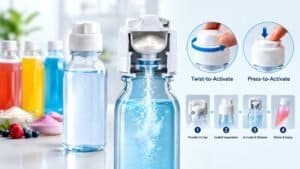
Activation caps are changing the way functional beverages, nutritional drinks, and wellness products are packaged. Unlike conventional bottle caps, an activation cap can keep powdered ingredients separate from the liquid inside the bottle until the product is ready to be consumed.
Choosing the right plastic bottle cap is more than selecting a closure that fits a bottle. The cap affects product protection, leakage prevention, dispensing performance, consumer convenience, production efficiency, and the overall reliability of a packaging system.

A person in China claimed to represent a Kuwait customer and asked for our factory information and an on-site audit.
We asked what cap the customer needed, but they couldn’t provide any product requirements and went directly to requesting factory details.
We welcome genuine customer audits. But we verify the customer, project and representative first.
Factory audits are welcome. Unverified requests are not.

Twist Activate Caps manufacturer offering high-quality activation caps for beverages, supplements, and functional packaging solutions. Improve shelf stability and create premium product experiences for global brands.
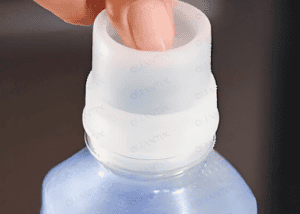
In the beverage and functional packaging industry, user convenience and product protection play an increasingly important role in purchasing decisions. Press-to-activate caps provide a practical closure solution that combines easy operation, reliable sealing performance, and compatibility with modern beverage packaging systems.

A dosing cap is an innovative beverage packaging solution designed to store and release a concentrated ingredient directly into a bottle at the time of consumption.
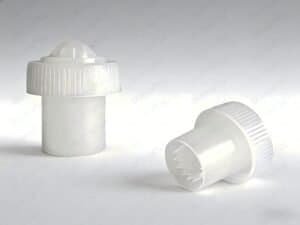
Are you searching for a reliable Press-to-Activate Caps manufacturer? Our factory specializes in producing high-quality push-activated bottle caps for beverages, cosmetics, nutritional supplements, and specialty liquids. With advanced production lines, strict quality control, and flexible customization, we deliver caps that are leak-proof, safe, and perfect for mass production.
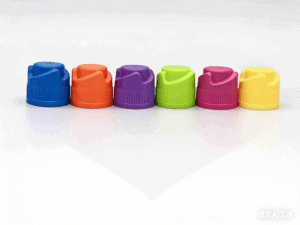
In the competitive world of packaging, small details often make a big difference. Twist-to-activate caps have become a top choice for brands across cosmetics, pharmaceuticals, food and beverage, and household industries, thanks to their unbeatable combination of safety, convenience, and practicality. Unlike standard screw-top lids or pry-off closures, these specialized caps deliver controlled dispensing, tamper protection, and user-friendly operation, catering to global consumers and meeting strict regional packaging standards.
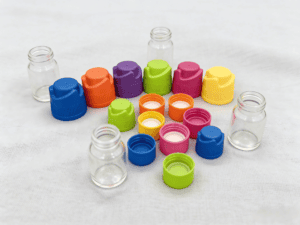
Deliver freshness, convenience, and accurate dosing with premium powder dispensing caps. Ideal for supplements, functional beverages, pharmaceutical powders, and cosmetic applications. Our caps ensure controlled powder release and superior product performance.

Flip-top caps are often treated as commodity components, yet they play a critical role in product safety, consumer experience, and brand differentiation. During scale-up from pilot runs to mass production, brands frequently encounter issues such as:
Choosing the right plastic cap is an important part of developing a reliable bottle packaging system. The closure needs to do more than simply fit the bottle. It must provide the required sealing performance, dispensing function, consumer experience, and compatibility with the production process.
A screw cap may be suitable for a conventional beverage, while a flip top cap may be better for personal care products or sauces. A silicone valve can provide controlled dispensing, while an activation cap may be required when powder and liquid need to remain separated until consumption.
For brands developing a new package or replacing an existing closure, the best approach is to evaluate the bottle, product, closure, and production process as one system.
This guide explains the key factors to consider when selecting a plastic bottle cap for commercial production.
The bottle neck is one of the first specifications you should check when selecting a plastic cap.
A cap cannot be selected correctly based only on the bottle’s capacity or appearance. The closure must match the bottle neck finish, dimensions, thread, and sealing structure.
Important specifications may include:
For example, standard screw closures can be designed around different neck finishes such as 28/400, 33/410, and 38/400 configurations. The correct choice depends on the bottle and the intended application. QuantixCap’s current screw-cap range includes these types of configurations.
An incorrect cap and bottle combination can result in:
For a custom project, providing a bottle drawing or neck-finish specification is one of the best ways to start the selection process.
The next question is simple:
Different products require different closure mechanisms.
Screw caps are suitable when the main requirements are secure closure, simple opening, and reliable sealing.
They are commonly used for:
A screw cap is often the starting point when the product does not require a specialized dispensing mechanism.
Flip top caps provide an integrated hinged lid and dispensing opening.
They are useful when consumers need to open, dispense, and close the package repeatedly.
Typical applications include:
QuantixCap’s current flip-top range includes different dimensions and dispensing orifice configurations, showing why the dispensing opening should be selected according to the actual product rather than simply the bottle size.
Push-pull caps are designed for convenient opening and dispensing.
They can be considered for products where consumers need quick access without completely removing the closure.
Typical applications may include:
The final design should be evaluated according to the bottle neck, product flow, consumer operation, and filling process.
A silicone valve can provide controlled dispensing and help reduce unwanted leakage.
These closures can be useful for products such as:
The valve design needs to be matched to the product because viscosity and flow behavior can significantly affect dispensing performance.
Activation caps serve a different purpose from conventional dispensing closures.
They can keep a powder or other functional ingredient separated from the liquid until the consumer activates the cap.
This type of closure can be considered for:
QuantixCap currently offers twist-to-activate Cap and press-to-activate closure solutions as part of its activation-cap range.
The product itself is one of the most important factors in closure selection.
A cap designed for water does not necessarily provide the same dispensing experience for honey, shampoo, concentrated detergent, or a thick sauce.
Before choosing a closure, consider:
Examples include:
These products generally require less dispensing resistance than thick formulations.
Examples include:
The dispensing opening and closure design become more important because the product needs to flow smoothly without excessive leakage.
Examples include:
These products may require a larger dispensing opening, specialized valve, or other dispensing structure.
The correct solution should be confirmed through actual product testing rather than selected only according to the product category.
The size and design of the dispensing opening can directly affect the consumer experience.
A smaller opening may provide better control for a low-viscosity liquid, while a thicker product may require a larger opening.
When evaluating an orifice, consider:
For example, a shampoo bottle and a sauce bottle may both use flip top closures, but their dispensing requirements can be completely different.
This is why the cap type alone is not enough to determine the correct closure.
A bottle cap must protect the product throughout its entire supply chain.
The closure may experience:
A reliable closure should maintain the required seal under the expected conditions.
Depending on the product and package, testing may include:
The exact testing requirements should be determined according to the bottle, product, closure, and intended market.
A bottle cap is not an independent component.
It becomes part of the customer’s production line.
Before selecting a closure, determine:
This is especially important for specialized closures.
For activation caps, for example, the filling process, powder characteristics, bottle neck, sealing structure, and activation mechanism all need to work together.
The closure material should be selected according to the application and required performance.
Common plastic materials used in closure manufacturing include:
Silicone may be used as a separate valve component in certain dispensing closures.
Material selection should consider:
For food, beverage, pharmaceutical, and personal-care applications, the required material documentation and compliance requirements should be confirmed before production.
Some products require more than a basic seal.
A tamper-evident feature can provide visible evidence that the package has been opened.
These requirements determine whether a standard screw cap, flip top cap, silicone valve, push-pull closure, or activation cap is more appropriate.
Technical specifications are important, but the closure must also be easy for the end user to operate.
Consider:
For example:
Bottled water may require a simple screw closure.
Shampoo may benefit from a flip top.
Sports beverages may require a convenient dispensing mechanism.
Thick sauces may benefit from a silicone valve.
Functional beverages containing separated powder may require an activation closure.
The best closure is therefore the one that matches both the product requirements and the intended user experience.
Another important decision is whether to use a standard closure or develop a custom design.
A standard cap may be appropriate when:
Advantages may include:
A custom cap may be appropriate when you require:
Custom development usually requires more engineering and testing.
Before developing a new mold, it is therefore important to confirm whether an existing closure can meet the project requirements.
Providing complete technical information can make the quotation and development process much more efficient.
Provide:
Common customization options include:
Provide:
Specify:
One of the most important steps before mass production is sample testing.
Ideally, testing should use:
Your actual bottle + your proposed cap + your actual product
This allows you to evaluate the complete packaging system.
Testing can help verify:
For specialized closures, testing becomes even more important.
For example, an activation cap should be evaluated with the intended powder because powder characteristics can affect filling, storage, activation, and release performance.
For most packaging projects, the selection process can be simplified into six steps:
Step 1: Confirm the Bottle Neck
Identify the neck diameter, finish, thread, and sealing requirements.
Step 2: Define the Product
Determine the product type, viscosity, flow behavior, and compatibility requirements.
Step 3: Define the Dispensing Method
Decide whether the package requires:
Step 4: Confirm Sealing Requirements
Determine the required leak resistance, tamper evidence, and package integrity.
Step 5: Check Production Compatibility
Confirm that the cap can be applied reliably using the customer’s filling and capping equipment.
Step 6: Test Samples
Evaluate the actual bottle, closure, and product together before moving to mass production.
Before placing an order, make sure you can answer these questions:
| Requirement | What to Confirm |
|---|---|
| Bottle neck | Diameter and neck finish |
| Thread | Thread specification |
| Product | Liquid, powder, or combination |
| Viscosity | Low, medium, or high |
| Dispensing | Pour, squeeze, flip, push, or activate |
| Sealing | Leak and package integrity requirements |
| Material | PP, PE, HDPE, LDPE, silicone, etc. |
| Tamper evidence | Required or not required |
| Filling line | Capping equipment and production speed |
| Customization | Color, logo, dimensions, structure |
| Volume | Initial order and annual demand |
| Testing | Bottle, cap, and product compatibility |
An off-the-shelf closure may be sufficient for a straightforward packaging project.
However, direct communication with a plastic cap manufacturer can be particularly useful when the project involves:
QuantixCap currently supplies multiple closure categories, including screw caps, flip top caps, silicone valve solutions, push-pull caps, tamper-evident caps, liquid detergent caps, and activation caps.
The goal should not simply be to find a cap that looks suitable. It should be to identify a closure that works with the entire packaging system.
Choosing the right plastic bottle cap starts with the bottle and product—not the appearance of the cap.
Before selecting a closure, evaluate:
A standard screw cap may be the right solution for a conventional beverage. A flip top cap can provide convenient dispensing for personal care or food products. A silicone valve can help control the flow of thicker products, while an activation cap can keep functional ingredients separated from liquid until the point of consumption.
The right closure is the one that fits the bottle, works with the product, performs reliably in production, and provides the required consumer experience.
If you already have a bottle drawing, neck specification, product information, or target quantity, QuantixCap can evaluate your requirements and help identify a suitable plastic closure solution.
Contact QuantixCap to discuss your bottle cap requirements, request samples, or explore a custom closure project.
Based in China, QuantixCap specializes in producing high-quality plastic caps and innovative closure systems tailored for the food, beverage, personal care, and household industries. From Twist-to-Activate Caps to Flip Top Caps, Silicone Valves, Push-Pull Caps, and Liquid Detergent Caps, our solutions are designed to enhance product functionality and branding.
With years of manufacturing expertise, we provide durable, precise, and customizable cap solutions that meet global quality standards. Whether you need standard screw caps for everyday packaging or advanced dispensing caps for functional beverages and cleaning products, QuantixCap ensures reliable performance and professional design.
By combining innovation and strict quality control, QuantixCap supports brands worldwide with closure systems that improve usability, safety, and shelf appeal. Explore our complete product portfolio, including Twist-to-Activate Caps, Plastic Flip Caps, Silicone Valves, Standard Screw Caps, Push-Pull Closures, and Liquid Detergent Caps, and feel free to Contact Us for custom solutions that fit your market needs.